Sleep Apnea Signs Causes and Treatments How Dentists Can Help You Sleep Better

Waking up tired after a full night in bed can feel confusing. So can loud snoring, morning headaches, dry mouth, or suddenly jolting awake at night. These problems are easy to blame on stress or a busy schedule, but they can also point to sleep apnea.
Sleep apnea is a common sleep-related breathing disorder that can affect energy, mood, heart health, and daily focus. The good news is that it can be identified and treated. For many people, dentists play a key role in spotting warning signs and offering treatment options that make sleep safer and more restful.
This article is for general education only and is not a diagnosis. If sleep apnea is possible, a qualified medical professional or sleep specialist should evaluate it.

What sleep apnea is and why it matters
Sleep apnea happens when breathing repeatedly stops, slows, or becomes too shallow during sleep. These pauses may last long enough to lower oxygen levels or cause the brain to briefly wake the body so breathing can restart.
Most people do not remember these brief awakenings. Instead, they notice the effects the next day: fatigue, brain fog, irritability, or feeling unrefreshed.
The condition matters because sleep is when the body repairs, restores, and regulates many systems. Repeated breathing interruptions can place strain on the heart, blood vessels, brain, and metabolism. Untreated sleep apnea has been linked with health concerns such as high blood pressure, increased risk of heart problems, and daytime sleepiness that can affect driving or work safety.
The main types of sleep apnea
Sleep apnea is not one single condition. There are several types, and each has a different cause.
Obstructive sleep apnea
Obstructive sleep apnea, often called OSA, is the most common type. It happens when the airway becomes partly or fully blocked during sleep.
This blockage often occurs because the muscles in the throat relax too much. The tongue, soft palate, or other tissues can narrow the airway. When air struggles to pass through, snoring may happen. If the airway closes more fully, breathing may pause until the brain sends a signal to wake the body enough to breathe again.
Common factors that can raise the risk of obstructive sleep apnea include:
Extra soft tissue around the neck or throat
A narrow airway
A small or recessed lower jaw
Enlarged tonsils or adenoids
Nasal congestion
Sleeping on the back
Alcohol or sedative use before bed
Family history
Aging
Body weight can also play a role, but sleep apnea can affect people of many body types.
Central sleep apnea
Central sleep apnea is less common. It happens when the brain does not send steady signals to the muscles that control breathing.
In this type, the airway may not be physically blocked. Instead, the breathing pattern itself becomes irregular. Central sleep apnea can be linked with certain medical conditions, some medications, or nervous system concerns.
Complex sleep apnea
Complex sleep apnea, also called treatment-emergent central sleep apnea, includes features of both obstructive and central sleep apnea. It may appear during treatment for obstructive sleep apnea, especially when breathing patterns change after therapy begins.
Because the types can look similar from the outside, a sleep study is usually needed to know what is happening.
Common signs and symptoms to watch for
Sleep apnea can be hard to recognize because many symptoms happen while a person is asleep. A bed partner may notice the first signs, but people who sleep alone can still look for daytime clues.
Common nighttime signs include:
Loud, frequent snoring
Pauses in breathing during sleep
Gasping, choking, or snorting awake
Restless sleep
Waking up often to use the bathroom
Dry mouth or sore throat in the morning
Night sweats
Trouble staying asleep
Common daytime symptoms include:
Morning headaches
Feeling tired after enough hours in bed
Daytime sleepiness
Trouble focusing or remembering details
Mood changes, irritability, or low motivation
Lower interest in daily activities
Drowsiness while driving
Jaw discomfort, teeth grinding, or waking with facial tension
Snoring alone does not always mean sleep apnea, and not everyone with sleep apnea snores loudly. The bigger warning sign is a pattern of poor sleep, breathing changes, and daytime fatigue.
Seek medical advice sooner if there are witnessed breathing pauses, gasping at night, high blood pressure that is hard to control, or daytime sleepiness that affects driving.
What causes sleep apnea
Sleep apnea usually develops from a mix of anatomy, sleep habits, and health factors.
In obstructive sleep apnea, the airway becomes unstable during sleep. When throat muscles relax, the soft tissues around the airway may collapse inward. Some people have a jaw shape, tongue position, bite pattern, or palate structure that makes this more likely.
Dental and facial structure can matter. A smaller lower jaw, narrow dental arch, crowded teeth, or high palate may reduce space for the tongue or airway. These features do not guarantee sleep apnea, but they can raise suspicion when symptoms are present.
Lifestyle and health factors can also contribute. Alcohol relaxes airway muscles. Smoking can irritate and inflame airway tissues. Nasal congestion can make breathing through the nose harder. Weight changes may affect the amount of tissue around the airway.
Sleep position matters too. Many people breathe worse when sleeping on their back because gravity allows the tongue and soft palate to fall backward.
Treatment options that can help
The right treatment depends on the type of sleep apnea, severity, symptoms, medical history, and personal comfort. A sleep specialist can help match the treatment to the diagnosis.
Lifestyle changes
Lifestyle changes may reduce symptoms, especially in mild cases or when paired with other treatments.
Useful changes may include:
Sleeping on the side instead of the back
Limiting alcohol close to bedtime
Avoiding sedatives unless prescribed and reviewed by a clinician
Treating nasal allergies or congestion
Quitting smoking
Keeping a steady sleep schedule
Reaching a healthy weight when weight is a contributing factor
Getting regular physical activity
These changes can help, but they may not be enough for moderate or severe sleep apnea. If breathing pauses continue, medical treatment is still needed.
CPAP and other airway pressure machines
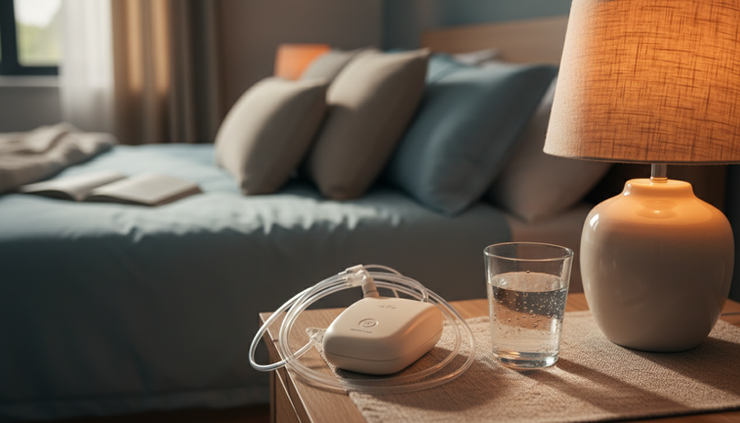
A CPAP machine is one of the most common and effective treatments for obstructive sleep apnea. CPAP stands for continuous positive airway pressure. The machine sends a gentle, steady stream of air through a mask to help keep the airway open during sleep.
Some people adjust quickly. Others need time to find the right mask, humidity setting, pressure level, or sleeping position. If CPAP feels uncomfortable, that does not mean treatment has failed. It may mean the equipment needs adjustment.
Other airway pressure options include bilevel PAP and auto-adjusting PAP machines. A sleep specialist can decide which is best.
Dental sleep appliances
A dental sleep appliance is a custom-made device worn in the mouth during sleep. The most common type is a mandibular advancement device. It gently holds the lower jaw forward to help keep the airway more open.
Oral appliances are often used for mild to moderate obstructive sleep apnea. They may also help some people with severe sleep apnea who cannot tolerate CPAP, though this should be guided by a sleep physician.
A custom appliance from a trained dentist is different from a store-bought mouthguard. It is fitted to the teeth and bite, adjusted over time, and monitored for comfort and effectiveness.
Surgery and other medical treatments
Some people may benefit from surgery or other procedures, especially when a clear structural blockage is present. Options may address the nose, tonsils, soft palate, tongue position, or jaw structure.
Surgery is not the first choice for everyone. It requires careful evaluation, and results vary based on anatomy and the type of sleep apnea.

How dentists can help with sleep apnea
Dentists are often in a unique position to notice signs of sleep apnea. Many people see a dentist more regularly than they see a sleep specialist, and the mouth can show clues about nighttime breathing problems.
A dentist cannot diagnose sleep apnea from a dental exam alone. Diagnosis usually requires a sleep study ordered or interpreted by a qualified medical provider. Still, dentists can screen for risk, start the conversation, and coordinate care.
Dentists can spot airway and bite clues
During an exam, a dentist may notice:
Worn teeth from grinding or clenching
A scalloped tongue, where the tongue presses against the teeth
A narrow arch or crowded teeth
A small or recessed lower jaw
Signs of dry mouth
Redness or irritation linked with mouth breathing
Large tonsils or a crowded throat space
Jaw pain or morning muscle soreness
These findings do not prove sleep apnea, but they can support a referral for further evaluation.
Dentists can ask targeted sleep questions
A dental visit may include questions such as:
Do you snore loudly?
Has anyone noticed pauses in your breathing?
Do you wake up gasping or choking?
Do you feel tired during the day?
Do you wake with headaches or dry mouth?
Do you grind your teeth at night?
Honest answers help the dentist decide whether a sleep study may be needed.
Dentists can provide oral appliance therapy
For people diagnosed with obstructive sleep apnea, a dentist trained in dental sleep medicine can make and adjust an oral appliance.
The process often includes:
A review of the sleep diagnosis and medical history
A dental exam to check teeth, gums, jaw joints, and bite
Digital scans or impressions of the mouth
Fitting the appliance
Follow-up visits for adjustments
Communication with the sleep physician
Repeat testing when needed to confirm that treatment is working
Follow-up matters. An appliance that feels fine may still need adjustment to improve breathing. It can also affect the bite or jaw comfort over time, so regular monitoring is part of good care.
When to seek professional help
Do not wait for symptoms to become severe. Sleep apnea often builds slowly, and people may adapt to feeling tired.
Consider seeking help if any of these apply:
Someone has seen you stop breathing during sleep
You wake up choking, gasping, or short of breath
Snoring is loud, frequent, or disruptive
You feel sleepy while driving
Morning headaches happen often
You have high blood pressure along with poor sleep
You wake with dry mouth, jaw soreness, or signs of teeth grinding
You feel tired despite spending enough time in bed
A good first step is to talk with a primary care physician, dentist, or sleep medicine provider. They may recommend a home sleep apnea test or an overnight sleep study in a sleep center.
If a dentist suspects sleep apnea, the next step is usually a referral, not immediate treatment. This helps make sure the type and severity are known before choosing therapy.

Simple habits that may improve sleep quality
Treatment works best when the sleep environment and routine support steady rest. These habits cannot replace medical care for sleep apnea, but they can help the body sleep better.
Try these practical steps:
Keep a regular bedtime and wake time, even on weekends
Sleep on your side if back sleeping worsens snoring
Raise the head of the bed slightly if recommended
Keep the bedroom cool, dark, and quiet
Avoid heavy meals close to bedtime
Limit alcohol in the evening
Reduce screen use before bed
Use nasal saline or allergy care if congestion is a problem
Clean CPAP equipment or oral appliances as directed
Bring treatment problems up early instead of stopping on your own
If CPAP feels noisy, leaky, dry, or claustrophobic, ask for help. Mask options, humidity settings, pressure adjustments, and gradual practice can make a big difference.
If an oral appliance causes jaw soreness or bite changes, schedule a dental follow-up. Small adjustments often improve comfort.
Better sleep starts with the right diagnosis
Sleep apnea is treatable, but guessing is not enough. The most effective plan starts with recognizing the signs, confirming the diagnosis, and choosing therapy that fits the person and the condition.
Dentists can be valuable partners in this process. They can notice airway-related clues, screen for symptoms, refer for sleep testing, and provide custom oral appliance therapy when appropriate. Medical providers and sleep specialists complete the team by diagnosing the condition and guiding care.
If snoring, gasping, headaches, dry mouth, or daytime sleepiness are part of your normal routine, take the pattern seriously. Restful sleep is not a luxury. It is part of health, safety, and quality of life, and help is available.


Comments