How 3D Printing Is Transforming Dental Care at Arcadia Medi-Dental Group

A retainer that fits on the first try. A night guard that feels comfortable enough to wear all night. A dental model that helps a patient see the plan before treatment begins. These once felt like small miracles of lab work and patience. Now, at Arcadia Medi-Dental Group, they are becoming part of a faster, more precise way to deliver care.
3D printing and in-house milling are changing what patients can expect from modern dentistry. Instead of relying only on traditional impressions, outside labs, and long wait times, the dental team can use digital scans, computer-guided design, printed models, and milled restorations to plan and create treatment with greater control.
The result is not technology for its own sake. The real value shows up in everyday moments: fewer remakes, clearer communication, shorter visits, better-fitting appliances, and more confidence before treatment begins.
This article is informational only and does not replace a personal diagnosis or treatment plan from a licensed dental professional.

Digital dentistry makes care more personal
Traditional dentistry has always depended on precision. A crown, retainer, aligner, or night guard only works well when it matches the patient’s mouth closely. Small errors can lead to pressure points, poor fit, bite issues, or extra appointments.
3D printing improves that process by starting with a digital scan. Instead of using goopy impression material, the team can often capture the shape of the teeth and bite with an intraoral scanner. That scan becomes a digital file, which can be used to design appliances, print models, guide treatment planning, or support milling.
For patients, this can make the experience feel different right away.
A digital scan may be more comfortable than a traditional impression, especially for patients with a strong gag reflex. It also lets the dental team review the mouth on a screen, zoom in, rotate the image, and explain what they see. That visual step can make treatment less mysterious.
For the dentist, the benefit is control. The digital file can be checked before anything is made. If a scan misses an area, the team can often rescan it right away instead of discovering a problem after sending an impression to a lab.
That single shift, from physical guesswork to digital confirmation, supports much of the change happening at Arcadia Medi-Dental Group.
3D-printed retainers can improve fit, speed, and consistency
Retainers have a simple job: help teeth stay where they belong after orthodontic treatment. But anyone who has worn one knows comfort matters. If a retainer feels bulky, tight in the wrong places, or rough around the edges, it may end up in a case instead of in the mouth.
3D printing helps by making the retainer process more repeatable.
A digital scan records the final position of the teeth. From there, the team can create a model and fabricate a clear retainer designed to match that exact position. If the retainer is lost or damaged later, the saved digital file may make replacement easier than starting from scratch, depending on the case and how much the teeth have shifted.
That matters because retainers are not “set it and forget it” devices. They need to be worn as prescribed, checked periodically, and replaced when they crack, warp, or stop fitting well.
The biggest patient benefits often include:
A cleaner, more comfortable scanning process
A close fit based on detailed digital records
Faster replacement when a usable file is available
More consistent results when multiple retainers are needed
Less chance of distortion compared with some traditional impressions
One common scenario involves a patient who finishes clear aligner treatment and wants to protect the result. In the past, that patient might have needed a traditional impression and a waiting period for lab work. With a digital workflow, the dental team can scan, check the bite, and create records that support a precise retainer.
A representative patient comment might sound like this:
“I was worried the retainer would feel bulky, but it snapped in smoothly. I liked seeing the scan on the screen because I understood exactly what it was made from.”
That type of feedback reflects a larger point. The technology feels useful to patients when it solves a real problem, like comfort, timing, or confidence.
Custom night guards protect teeth with better comfort
Night grinding and clenching, often called bruxism, can cause tooth wear, jaw soreness, headaches, and cracked dental work. A custom night guard can help protect the teeth by creating a controlled barrier between the upper and lower arches.
Store-bought guards may seem convenient, but they often feel thick or unstable. Some patients chew through them quickly. Others stop wearing them because they interfere with sleep.
A custom night guard is different because it is designed for the patient’s mouth. With 3D printing and digital design, Arcadia Medi-Dental Group can create a night guard workflow that focuses on fit, bite balance, and comfort.
The scan captures the teeth. Software helps the dentist evaluate how the bite comes together. The appliance can then be designed to protect the teeth while reducing unwanted bulk where possible.
For a patient who already struggles with sleep, that can make a major difference.
Consider a patient who wakes up with jaw tension and notices small chips along the front teeth. During the visit, the dental team identifies signs of grinding and explains how a custom guard works. A digital scan replaces the traditional impression. When the guard is delivered, adjustments can be made so the bite feels even.
The patient’s experience is not just about getting a device. It is about finally understanding the cause of the damage and having a realistic way to reduce risk.
A representative testimonial might read:
“I had tried drugstore guards before and never kept using them. This one felt stable, and after a few nights I stopped noticing it as much.”
Night guards do not cure every jaw or sleep issue, and not every patient needs the same appliance. Some symptoms require a broader evaluation. Still, for many grinding and clenching cases, custom fit is the reason the guard gets worn consistently.
That is where digital dentistry helps the most. It supports comfort, and comfort supports compliance.

Dental models help patients see the plan before treatment begins
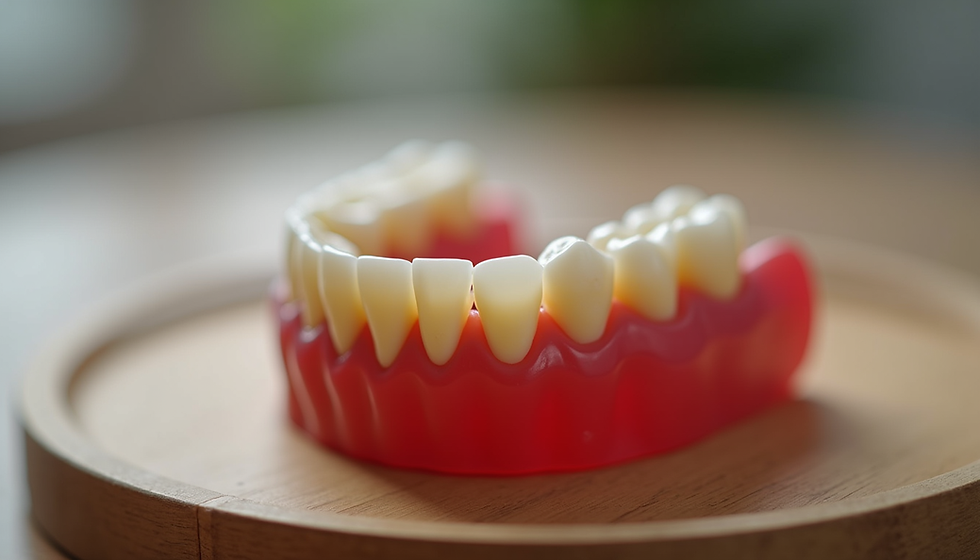
A dental model is more than a replica of teeth. It is a planning tool.
When a dentist can hold a model, examine it from every angle, and compare it with digital images, treatment decisions become easier to explain. For patients, models make abstract dental problems feel concrete.
A scan on a screen is helpful. A printed model adds another layer. It can show crowding, spacing, tooth wear, bite relationships, and the shape of the arch in a way that feels immediate.
At Arcadia Medi-Dental Group, dental models can support several kinds of care:
Retainers and orthodontic follow-up
Night guard design
Crown and bridge planning
Implant planning discussions
Smile design previews
Complex bite evaluations
Patient education before treatment
For example, a patient considering cosmetic or restorative treatment may have trouble picturing what the dentist means by “tooth position,” “bite clearance,” or “wear pattern.” A printed model lets the team point to exact areas and explain why a proposed treatment matters.
This helps patients ask better questions.
Instead of hearing a technical explanation and nodding along, the patient can compare the current model with a proposed design or diagnostic wax-up. They can see where a tooth is short, where space is limited, or why one option may require more preparation than another.
That kind of clarity can reduce anxiety. It also helps patients make decisions based on what is actually happening in the mouth, not just on a list of procedures.
In-house milling can make same-day progress possible
3D printing is only one part of digital dentistry. In-house milling also plays a powerful role.
Milling uses a computer-guided machine to shape a restoration, such as a crown or other dental component, from a solid block of material. While 3D printing builds an object layer by layer, milling carves it with high precision.
When a practice has in-house milling, it can reduce the need to send certain cases to an outside lab. That can mean fewer delays, fewer temporary restorations, and a smoother patient experience.
The exact timing depends on the treatment, material, and clinical situation. Not every case is a same-day case. Some treatments still benefit from outside lab artistry or additional steps. But when in-house milling is appropriate, it can change the pace of care.
A typical digital workflow may look like this:
Step | What happens | Why it helps |
Digital scan | The teeth and bite are captured with an intraoral scanner | Reduces the need for traditional impressions |
Digital design | The restoration or appliance is planned on screen | Allows careful review before production |
In-house production | The item is printed or milled at the practice | Saves time compared with many outside lab workflows |
Fit and adjustment | The dentist checks comfort, bite, and function | Supports a better final result |
For a patient with a cracked tooth, speed matters. A traditional process may involve a temporary crown, a lab wait, and a second appointment. In some cases, in-house milling can shorten that timeline. The patient spends less time managing a temporary restoration and more time with a finished solution.
From the dental team’s side, milling also improves communication. If something needs refinement, the dentist can often address it directly in the design or production process. That feedback loop is much tighter when the tools are in the same practice.
The patient experience becomes calmer and more efficient
Technology in dentistry only matters if it improves care. At Arcadia Medi-Dental Group, the value of 3D printing and milling shows up in practical ways.
Patients often care about four things:
Will it hurt?
How long will it take?
Will it fit?
What will it cost me in time and stress?
Digital tools cannot remove every uncertainty, but they can improve many parts of the experience.
A scan can be easier than impressions. A model can make the treatment plan easier to understand. A printed retainer can fit closely. A custom night guard can feel more wearable. An in-house milled restoration can reduce waiting in the right case.
These changes also help build trust. When patients can see their scan, hold a model, and understand why a treatment is recommended, the conversation feels less rushed. The dentist is no longer asking the patient to imagine everything. The plan becomes visible.
Here is a common example.
A patient comes in with worn front teeth and mild jaw soreness. They are not sure whether the problem is cosmetic, functional, or both. The team scans the mouth, reviews the wear pattern, and creates a model. The dentist shows how the teeth contact and explains why a night guard may help protect the enamel. If restorative care is needed, the same digital record can support planning.
The patient leaves with a clearer picture of the issue. They understand the “why,” not just the “what.”
That is a better kind of dental visit.
Better records support better long-term care
One of the quieter benefits of 3D printing and digital dentistry is recordkeeping.
Traditional stone models take physical storage space and can chip or break. Digital files can be stored, reviewed, and compared over time. That can help the dental team monitor changes in tooth position, wear, or bite patterns.
For retainers, this can be especially helpful. If a patient loses a retainer soon after treatment and the teeth have not shifted, the existing digital record may help with replacement. For night guards, records can help compare fit and wear over time. For restorative planning, digital models can support more thoughtful sequencing when treatment happens in stages.
Long-term dental care is rarely about one appointment. It is about tracking change.
Digital records give the team another way to do that with accuracy and consistency.
Modern tools still depend on skilled clinical judgment
It is easy to focus on the equipment, but 3D printers and milling machines do not replace the dentist. They extend what a skilled dental team can do.
A printer can create a model, but the dentist decides what the model means. A mill can shape a restoration, but the dentist must plan the margins, evaluate the bite, select the material, and verify fit. A scanner can capture details, but the team must know when the scan is complete and when more information is needed.
This is why the best use of dental technology feels personal. The tools serve the diagnosis, the treatment plan, and the patient’s comfort.
At Arcadia Medi-Dental Group, the goal is not to make dentistry feel mechanical. It is to make it more precise, more understandable, and more convenient.
What this means for future visits
For many patients, the biggest change is simple: dental care can feel less uncertain.
A retainer is not just “made somewhere.” It starts with a clear digital record. A night guard is not a bulky guess. It is designed around the patient’s teeth and bite. A model is not just a teaching aid. It is a planning tool. A milled restoration is not just faster. It can be part of a more controlled process from scan to final fit.
That is the promise of 3D printing in dental care at its best. It brings the plan closer to the patient, the production closer to the dentist, and the final result closer to what the mouth actually needs.
For anyone who has delayed treatment because it felt confusing, uncomfortable, or time-consuming, these tools offer a more approachable path. The technology is impressive, but the real transformation is human: better conversations, better fit, and care that feels easier to understand from the start.


Comments